Bloomberg Professional Services
Empirical evidence suggests the frequency and severity of macroeconomic shocks are increasing, driven by geopolitical tensions, climate change, global inflation and supply chain disruption. Financial institutions, therefore, require a stronger risk management framework than ever.
Here we explore how banks and other market participants worldwide are responding to this new era of heightened uncertainty.
Global tariffs
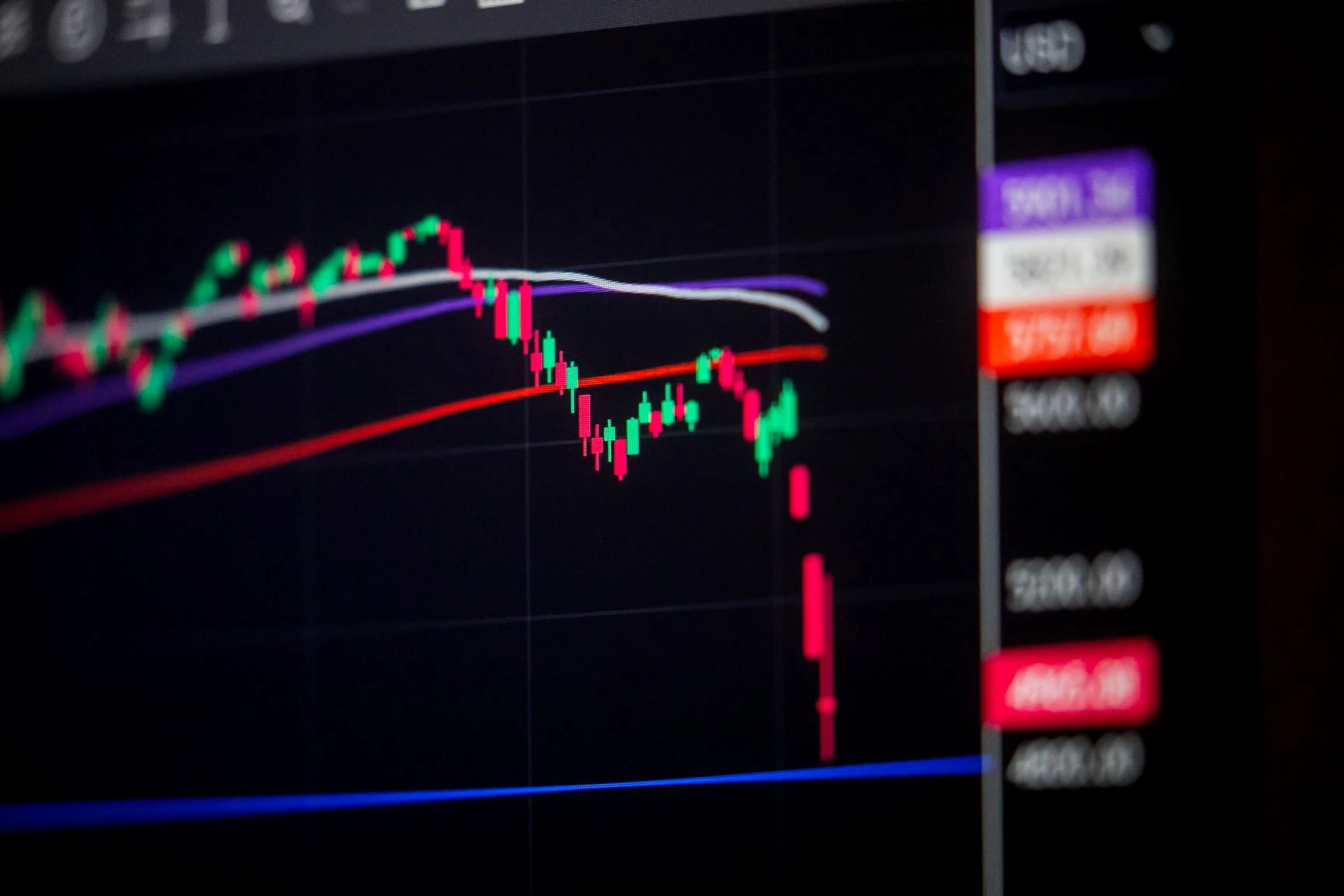
The significant macroeconomic event that took place in April 2025, was shortly after the US announced it would impose far-reaching trade tariffs on the rest of the world.
While the imposition of the tariffs had been widely anticipated, many financial institutions under-estimated the extent to which they would affect markets.
PRODUCT MENTIONS
Risk managers were especially caught off guard by the fact that it wasn’t just the stock markets that came under pressure but the bond markets as well.
Sam Ahmed, former Group Chief Operating Officer for Financial Markets at DBS, APAC says that existing linear modelling at many reginal and global banks were ill-equipped to deal with this kind of ‘Black Swan’ event.
He says that there were three orders of risk that risk managers had to consider: that Donald Trump would win the US election, that the swingeing tariffs would lead to massive volatility and that once this happened US Treasuries would sell off.
“More than 90% of financial institutions anticipated the first two orders of risk in their models. Where they fell short was on the third order risk. Risk managers assumed that, if US equity markets sold off, they could simply buy US Treasuries. That didn’t work this time and instead we saw money flowing into emerging markets,” says Ahmed.
Similarly, several European and U.S. institutions also faced unexpected cross-asset volatility as traditional correlations between equities and Treasuries broke down, reinforcing the need for adaptive risk frameworks across regions.
Stress testing
An over-reliance on historical data and correlations in stress tests meant that many banks were ill-equipped to model different scenarios upon the introduction of new tariffs.
“We live in a world where you cannot forecast future movements based on historic correlations. Banks need to change their linear view of the world and introduce more randomness,” says Ahmed.
Monte Carlo stochastic modelling is a good way of doing this. While many large banks already use Monte Carlo techniques within their critical finance functions, Ahmed says that experience with the trade tariffs shock has persuaded many to review the risk that they are capturing.
Stress testing, however, can only take banks so far.
“You can do lots of stress testing. You can double-stress the book. You can market-stress the book. But you don’t know exactly what the next event is going to look like,” says the head of liquidity management at an APAC bank. “Everybody knew about the tariffs, but nobody knew about the numbers.”
This has been a perennial problem with stress testing and is one of the reasons banks have been looking to update their models, introducing methods such as reverse stress testing and macroprudential analysis.
“Collectively, shocks like these underline the need for dynamic, real-time risk reporting that can apply a variety of data-driven stress tests to model changing conditions and external events,” says David Allright, Global Head of Sell-Side Risk Product at Bloomberg.
Under pressure from regulators, banks have also been increasing the frequency with which they run stress tests – something that the head of liquidity management says is a positive.
This recalibration is mirrored globally, for example, both the Bank of England and the U.S. Federal Reserve have broadened scenario testing to capture non-linear and climate-related risks, underscoring that stress testing modernization is now a global regulatory trend.
Intraday liquidity
The increased prevalence of macroeconomic shocks is also causing many to wonder if their assets can be easily converted into cash in times of crises.
This is an issue that has been simmering for a few years, ever since rising interest rates caused a run on Silicon Valley Bank in the US. Its eventual collapse marked the third-biggest banking failure in US history.
The SVB failure contributed towards the overall stress and uncertainty in the banking system that ultimately brought down Credit Suisse.
“Sometimes a bank failure is not about solvency. It’s about logistics,” says Roland Ho, Head of Asset Liability Matching at OCBC. “Banks need to be confident that they can easily convert what they consider HQLA [high quality liquid assets] into cash to meet their obligations on an intraday basis.”
This is an issue that is top of the mind for many regional and global regulators. At the end of August, the Monetary Authority of Singapore published new liquidity risk management guidelines, which outlined more granular details of what the regulator expects.
“As the market adapts to heightened liquidity requirements, modelling real-time behavioural scenarios will be fundamental to strengthening overall risk management,” says Bloomberg’s Allright.
To strengthen its own liquidity management, OCBC has used blockchain technology to establish a new short-term US dollar funding mechanism with JP Morgan.
“Even before the US markets open, we are able to tap into dollar funding should the need arise,” says Ho. “This is important for our risk management – and for addressing any concerns that the regulators might have.”
In Europe, the ECB has also intensified scrutiny of intraday liquidity buffers following the Credit Suisse collapse, while in the U.S. regulators have renewed emphasis on contingency funding and real-time liquidity monitoring, making these priorities truly global.
Interest rate shocks
Sudden swings in interest rates have also changed how risk management units assess exposure, with the result that many institutions have been looking to shorten the duration of the assets they hold.
“If rates move up too sharply, then our asset valuation will take a hit,” says Ho. “To address this, we have shortened the duration of our interest rate risk, while at the same time increasing the notional amount of the interest rate risk that we take on.”
There are two sides to this. While rising interest rates might put pressure on asset valuations, they also provide a boost to Net Interest Income.
“We look at the impact of interest rate changes across the different risk measurements. We manage everything centrally rather than look at things in isolation. This improves our overall risk profile,” says Ho.
Interest rate shocks could also encourage more hold-to-collect accounting for fixed income assets.
“For most of the bonds that we purchase, we apply ‘Fair Value Through Other Comprehensive Income’ accounting. This still causes certain fair value reserve changes that impacts the bank’s capital, namely Common Equity Tier 1. Applying hold-to-collect accounting will remove some of this volatility,” says Ho.
However, bookkeeping must line up with how banks trade. Hold-to-collect accounting should only be used for those assets that are kept on the balance sheet, rather than sold, with the purpose of extracting regular cashflows from them.
Another danger for banks is that higher rates could encourage depositors to take their money elsewhere, leading to a funding squeeze. This dynamic has been seen not only among regional banks in Japan but also among smaller lenders in Europe and the U.S., where deposit migration toward larger institutions and money market funds has intensified amid rising rates.
“Smaller regional banks in Japan are now facing an outflow of deposits to other banks with higher credit, or those that offer higher savings returns. This is a significant challenge for many institutions, who may need to find new investment opportunities,” says Tsuyoshi Oyama, CEO of RAF Laboratory, a risk management consultancy based in Tokyo.
These outflows have forced many institutions globally to reassess their funding models and seek new investment opportunities,
However, looking for higher-yielding investment opportunities can introduce more risk.
“Markets might be booming now, but they can easily turn around. It’s a risky situation,” says Oyama.
Structural shift
It’s not just short-term market uncertainty that banks are concerned about. They are also wondering whether recent macroeconomic shifts are symptomatic of a wider structural shift.
“Looking at the financial eco-system, we are seeing a decline in the use of US dollars. Countries like China and a few others are now trying to promote their own currencies for use as collateral,” says Ahmed.
While some countries may be promoting the use of their own domestic currencies, the US has one very important thing in its favor: it is widely traded between investors that sit outside of the US market.
“I have not yet seen a situation in which CNH was traded, but where China wasn’t either the buyer or the seller,” says the head of liquidity management quoted at the start of this article. “Cyclically the dollar may be declining, but structurally I’m not so convinced. One has to ask: what is the economically viable alternative to the dollar? Right now, there isn’t one.”
Ashok Das, Deutsche Bank’s Head of Global Emerging Markets and fixed income and currencies trading for Asia, points out that there is no other market that can match the depth of the dollar.
“People are not going to give up the dollar just because the geopolitical risk on the currency is more than it was in the past,” he says.
However, he acknowledges that there is a shift taking place, and this is something that risk managers might have to start thinking about.
“Those that are exposed to US dollars definitely want to diversify or hedge that exposure a bit more. At the same time, investors in certain countries want their invoices to be in their home country [currency]. It’s not a de-dollarisation, but we are going to see a lot more fragmentation in the markets,” says Das.
This trend is not limited to Asia. European treasuries are similarly exploring currency diversification through euro-denominated collateral markets, while in the Americas, U.S. institutions are balancing dollar dominance with growing demand for local-currency settlement options.
“This could deliver “a real shock” to a system that’s always relied on a centralized pool of eligible collateral,” Das adds.
As risk managers from Singapore to London to New York adapt to these evolving challenges, the next phase of resilience will depend on globally integrated liquidity access, cross-regional data transparency, and unified risk governance frameworks.
To learn more about Bloomberg Bank Treasury and Risk solutions click here.
This blog is a global adaptation of the “Macro Shocks Prompt Reset in APAC Risk Management” report. To read the original report, click here.
The information and data included in these materials are for illustrative purposes only. The BLOOMBERG TERMINAL service and Bloomberg data products (the “Services”) are owned and distributed by Bloomberg Finance L.P. (“BFLP”) except (i) in Argentina, Australia and certain jurisdictions in the Pacific islands, Bermuda, China, India, Japan, Korea and New Zealand, where Bloomberg L.P. and its subsidiaries (“BLP”) distribute these products, and (ii) in Singapore and the jurisdictions serviced by Bloomberg’s Singapore office, where a subsidiary of BFLP distributes these products. BLP or one of its subsidiaries provides BFLP and its subsidiaries with global marketing and operational support and service. Certain features, functions, products and services are available only to sophisticated investors and only where permitted. BFLP, BLP and their affiliates do not guarantee the accuracy of prices or other information in the Services. Nothing in the Services shall constitute or be construed as an offering of financial instruments by BFLP, BLP or their affiliates, or as investment advice or recommendations by BFLP, BLP or their affiliates of an investment strategy or whether or not to “buy”, “sell” or “hold” an investment. Information available via the Services should not be considered as information sufficient upon which to base an investment decision. The following are trademarks and service marks of BFLP, a Delaware limited partnership, or its subsidiaries: BLOOMBERG, BLOOMBERG ANYWHERE, BLOOMBERG MARKETS, BLOOMBERG NEWS, BLOOMBERG PROFESSIONAL, BLOOMBERG TERMINAL and BLOOMBERG.COM. Absence of any trademark or service mark from this list does not waive Bloomberg’s intellectual property rights in that name, mark or logo. All rights reserved. ©2026 Bloomberg.