ARTICLE
Week one in Iran: Countering drones, Europe fearful

Bloomberg Intelligence
This article was written by Bloomberg Intelligence Senior Industry Analyst Wayne Sanders and Industry Analyst Will Lee. It appeared first on the Bloomberg Terminal.
The war in Iran revealed notable shortcomings in air and missile defense, as widespread rocket and drone strikes across the Middle East show that most nations can’t defend against aerial attacks. The conflict will trigger tens of billions of dollars in defense spending for ramped-up production of RTX’s Patriot and Lockheed’s THAAD, and more affordable counter-drone technologies like BAE/L3Harris’ Vampire/APKWS, Rheinmetall’s Skynex, and AV’s Titan 4.
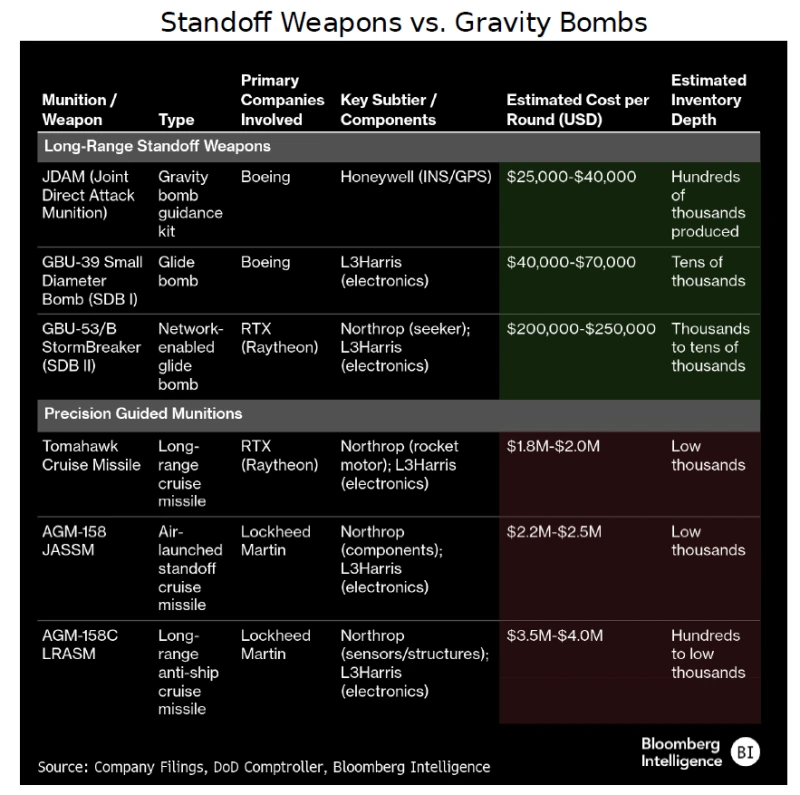
Gravity-bomb use signals US saving missiles, SRMs for elsewhere
Pivoting toward aircraft-delivered gravity bombs and guidance kits underscores a key readinessreality: the US has greater stores of joint direct-attack and small-diameter bomb munitions (tensto hundreds of thousands) than standoff missiles. Using bombs in Iran, lets the Pentagonpreserve long-range inventory (produced in limited annual quantities) for higher-endcontingencies, including a potential Indo-Pacific conflict. Bombs are cheaper, replaced faster andenable sustained sortie-driven strike campaigns without exhausting limited missile stores.
Shifting to gravity weapons in Iran preserves these high-end magazines (RTX’s Tomahawk and Lockheed’s AGM-158), as well as the solid-rocket motor (SRM) industry, for a Pacific contingency, where long-range strike is critical and US stockpiles aren’t as plentiful.
Iranian drone attacks set to drive contracts
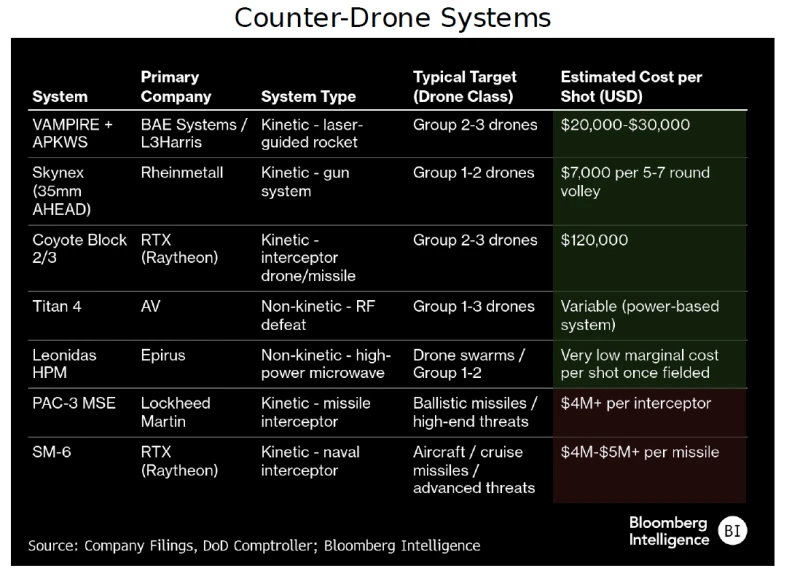
Iranian drone attacks on US bases, critical infrastructure and data centers across the Middle East highlight a glaring vulnerability: a lack of expandable, low-cost counter-drone munitions. The emerging response favors cheaper layered defenses, including systems like BAE Systems and L3Harris’ Vampire firing APKWS rockets, Rheinmetall’s Skynex (35mm AHEAD rounds) and RTX’s Coyote interceptors. These systems range in cost from the thousands of dollars to low hundreds of thousands per engagement, far cheaper than firing multimillion-dollar interceptors like Lockheed’s PAC-3 or RTX’s SM-6.
Promising near-zero marginal cost per shot, cost-effective nonkinetic systems like AV’s Titan RF and Epirus’s Leonidas high-power microwave programs are in development. Yet their ultimate scale and maturity present challenges.
US sinking of Iranian warship by sub sends stark signal
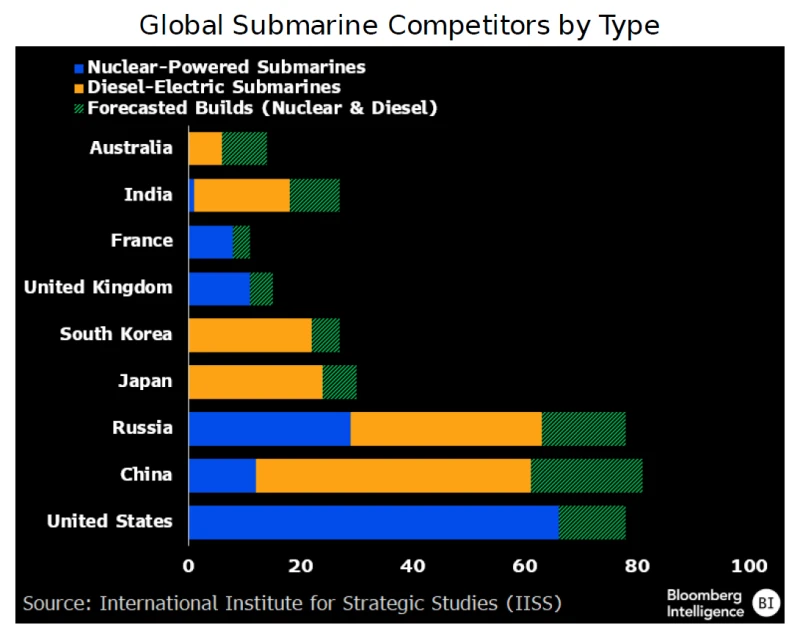
The sinking of the Iranian frigate IRIS Dena by a US submarine with a Lockheed MK-48 torpedo in international waters was a calculated signal that it can strike anytime and anywhere. The US has destroyed over 20 Iranian naval vessels to also further US Naval Capability in the region as well as provide some freedom of maneuver for marine traffic through the Strait of Hormuz.
The US destroyed over 20 Iranian naval vessels in the Persian Gulf to advance its capabilities, as well as shield against threats to maritime commerce in the region, including traffic through the Strait of Hormuz. That may ease concern about seaborne energy transport.
Limited interceptors biggest risk, drives capacity gains
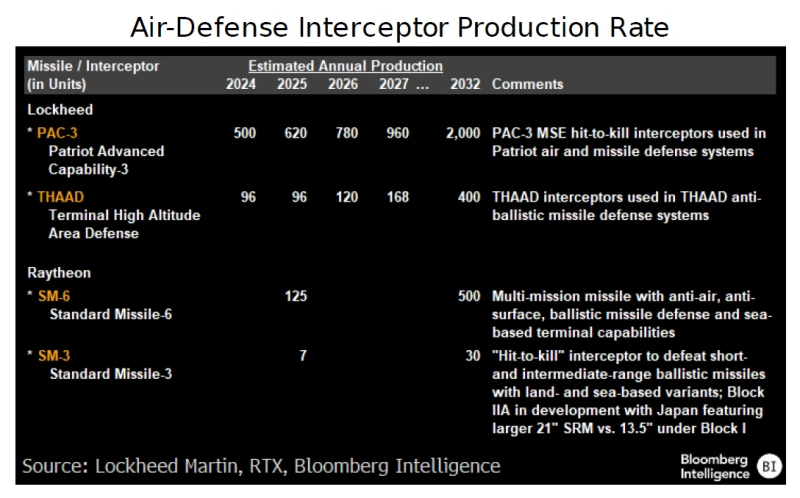
Limited air-defense interceptors are a key risk for the US and allies as production tries to keep pace with their use, exacerbated by fighting in Ukraine and Iran. Ukraine President Volodymyr Zelenskiy claimed over 800 PAC-3s were used in the first three days of the Iran war, outstripping Lockheed’s 2025 deliveries and driving the Pentagon to accelerate production. The Defense Department awarded Lockheed and RTX framework agreements spanning up to seven years to increase production 2-4x. The Iran war may catalyze the conversion of agreements into multiyear contracts, we calculate, aimed at increasing output on PAC-3 to 2,000 interceptors from 620 in 2025, THAAD to 400 (96), SM-6 to over 500 (125) and SM-3 to 30 (7).
More workers and shifts likely are needed to keep pace, yet a tight labor market might suggest some risk.
Russian threats drive Europe’s counter-drone push
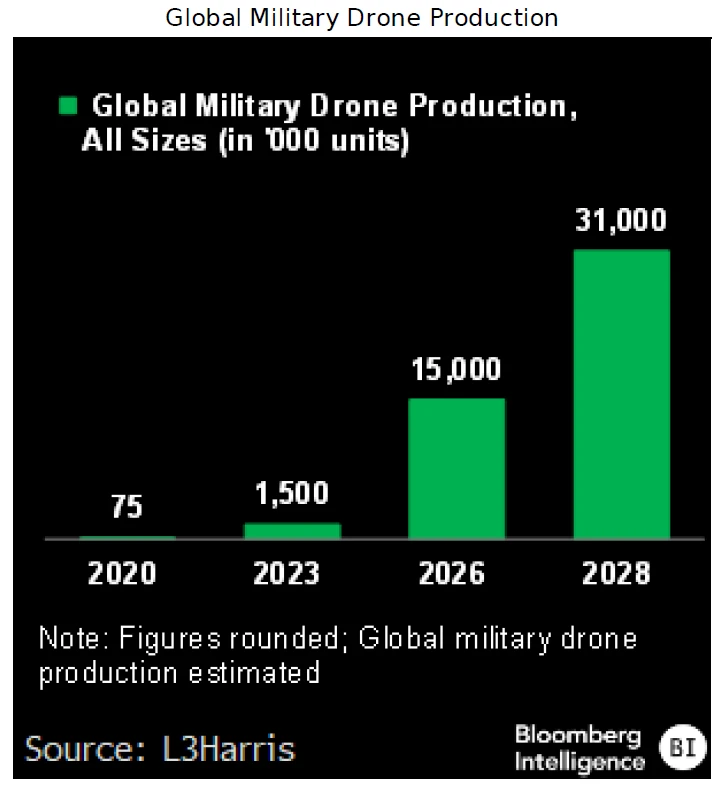
Europe seeks to fortify defenses against drones as Russia intensifies aerial attacks in Ukraine, mirroring the strategy used in Iran. Traditional systems like RTX’s Patriot and Eurosam’s SAMP/Tare ill-suited to defeat low-cost drone threats given the limited magazine depth of multimillion-dollar interceptors. Efforts to create an effective drone wall hinge on cheaper layered defenses like L3Harris’ Vampire fi ring BAE’s APKWS or Thales’ 70mm rockets and Rheinmetall’s Skynex using 35mm AHEAD rounds. These solutions reduce the cost curve into the tens of thousands vs. millions of dollars and preserve the magazine depth of air-defense interceptors.
Future nonkinetic options leveraging the electromagnetic spectrum can lower the marginal costper shot to almost zero, yet the challenge is developing and expanding the technology.
Russia’s military export constrained by Ukraine war
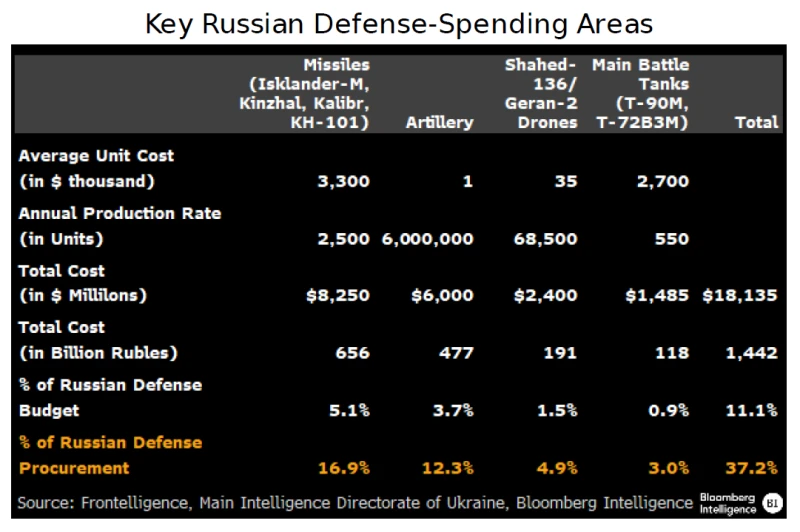
Russia’s economy hinges on military manufacturing for growth, yet much of its production is likely consumed domestically for the Ukraine war, restraining export capacity to supply Iran with weapons. Russia is spending heavily on defense, boosting arms and ammunition production 22xsince invading Ukraine in 2022, President Vladimir Putin has said. This year’s budget targets defense spending at 29% of total outlays, or 5.5% of GDP, and we calculate roughly 40% of its defense-procurement funding will replace artillery, drones, missiles and tanks used or destroyed in Ukraine.
Russian production of ballistic, hypersonic and cruise missiles could reach 2,500 a year, whileGeran-2 drones may top 6,000 a month. Iranian arms would have to be smuggled in, further limiting potential resupply.
European interceptors come as US ramps up builds
European munitions, including interceptors, will likely come from rising US prime contractor capacity in the near term for Europe to protect against threats from Russia. US contractors can likely ramp up production faster given factories that we expect aren’t being run at maximum potential. Before the Iran war, there was a desire to boost longer-term capacity, albeit at an efficient level. If the Pentagon agreed to pay costs, additional shifts and workers could be added to improve throughput in the near term.
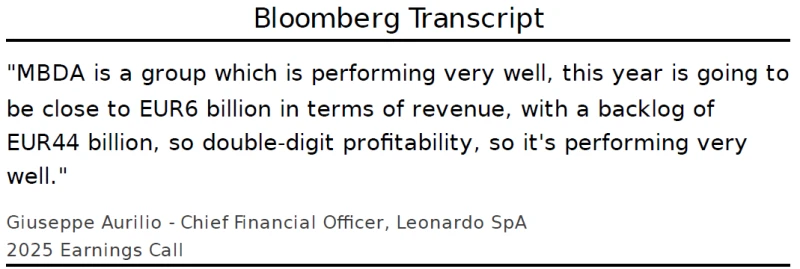
European productive capacity appears to require significant investment, as indicated by seven-year backlogs at MBDA, their largest interceptor and missile maker, which is jointly owned by Leonardo, BAE and Airbus.
The data included in these materials are for illustrative purposes only. The BLOOMBERG TERMINAL service and Bloomberg data products (the “Services”) are owned and distributed by Bloomberg Finance L.P. (“BFLP”) except (i) in Argentina, Australia and certain jurisdictions in the Pacific Islands, Bermuda, China, India, Japan, Korea and New Zealand, where Bloomberg L.P. and its subsidiaries (“BLP”) distribute these products, and (ii) in Singapore and the jurisdictions serviced by Bloomberg’s Singapore office, where a subsidiary of BFLP distributes these products. BLP provides BFLP and its subsidiaries with global marketing and operational support and service. Certain features, functions, products and services are available only to sophisticated investors and only where permitted. BFLP, BLP and their affiliates do not guarantee the accuracy of prices or other information in the Services. Nothing in the Services shall constitute or be construed as an offering of financial instruments by BFLP, BLP or their affiliates, or as investment advice or recommendations by BFLP, BLP or their affiliates of an investment strategy or whether or not to “buy”, “sell” or “hold” an investment. Information available via the Services should not be considered as information sufficient upon which to base an investment decision. The following are trademarks and service marks of BFLP, a Delaware limited partnership, or its subsidiaries: BLOOMBERG, BLOOMBERG ANYWHERE, BLOOMBERG MARKETS, BLOOMBERG NEWS, BLOOMBERG PROFESSIONAL, BLOOMBERG TERMINAL and BLOOMBERG.COM. Absence of any trademark or service mark from this list does not waive Bloomberg’s intellectual property rights in that name, mark or logo.
All rights reserved. © 2025 Bloomberg.