ARTICLE
The end of stable correlations: Why sell-side risk models need a new playbook
October 1, 2026
Bloomberg Professional Services
It is a truth universally acknowledged that bonds will rally during a sell-off of equities. Similarly, the dollar can always be relied on to strengthen during periods of heightened risk or surging interest rates, and gold is the ultimate hedge against financial and geopolitical turmoil.
Investors have built their portfolios, trading strategy and risk models around these immutable rules of thumb.
Today, some of these basic “truths” are looking decidedly shaky. The movements of assets in relation to one another are getting more nuanced depending on the precise nature of the market event, the policy response and the prevailing economic regime.
Indeed, assets that previously hedged risk and added diversification to weather tough times can find themselves plummeting in parallel with their counterparts.
For sell-side trading and risk teams, solving the “hedging” puzzle is now a lot more difficult, and requires increasingly complex modelling. Traders still have their rules of thumb, but need to add additional layers of analysis to consider how historic correlations might change under a shifting inflationary, monetary or geopolitical regime in order to properly price risk.
Trade rulebook out the window
Since the late 1980’s markets and economies have experienced growth on an unparalleled scale thanks to the power of globalization. Trade has become more integrated, capital generally flowed towards the most attractive returns, and supply chains evolved primarily around efficiency and cost.
Largely underpinning the charge was a rules-based international economic framework encouraging competition and dismantling barriers to trade.
This rules-based proposition has lost a lot of its potency in recent years. Trade relationships are being reshaped by tariffs, sanctions, export controls and bilateral negotiations, while governments are paying greater attention to the strategic resilience of supply chains. Energy security, semiconductor production, critical minerals and defense capacity are questions of national policy as well as commercial efficiency.
A tariff announcement, for example, will affect inflation, currencies, corporate margins and interest-rate expectations simultaneously. Export restrictions can increase the value of strategically important commodities such as semiconductors, and rare earth metals while damaging companies and economies dependent upon access to them.
Geopolitical conflict has once again emerged as a major disruptor, hitting energy supplies and altering expectations for monetary and fiscal policy. Traders have their finger on the pulse of international politics like never before as events in Russia, Ukraine and the Iranian peninsula rumble through the markets — causing an inflationary headache for governments and central banks.
When yesterday’s hedge stops hedging
The market turmoil that followed Donald Trump’s sweeping tariff announcements of April 2025 provides a striking example of how conventional hedging relationships can break down.
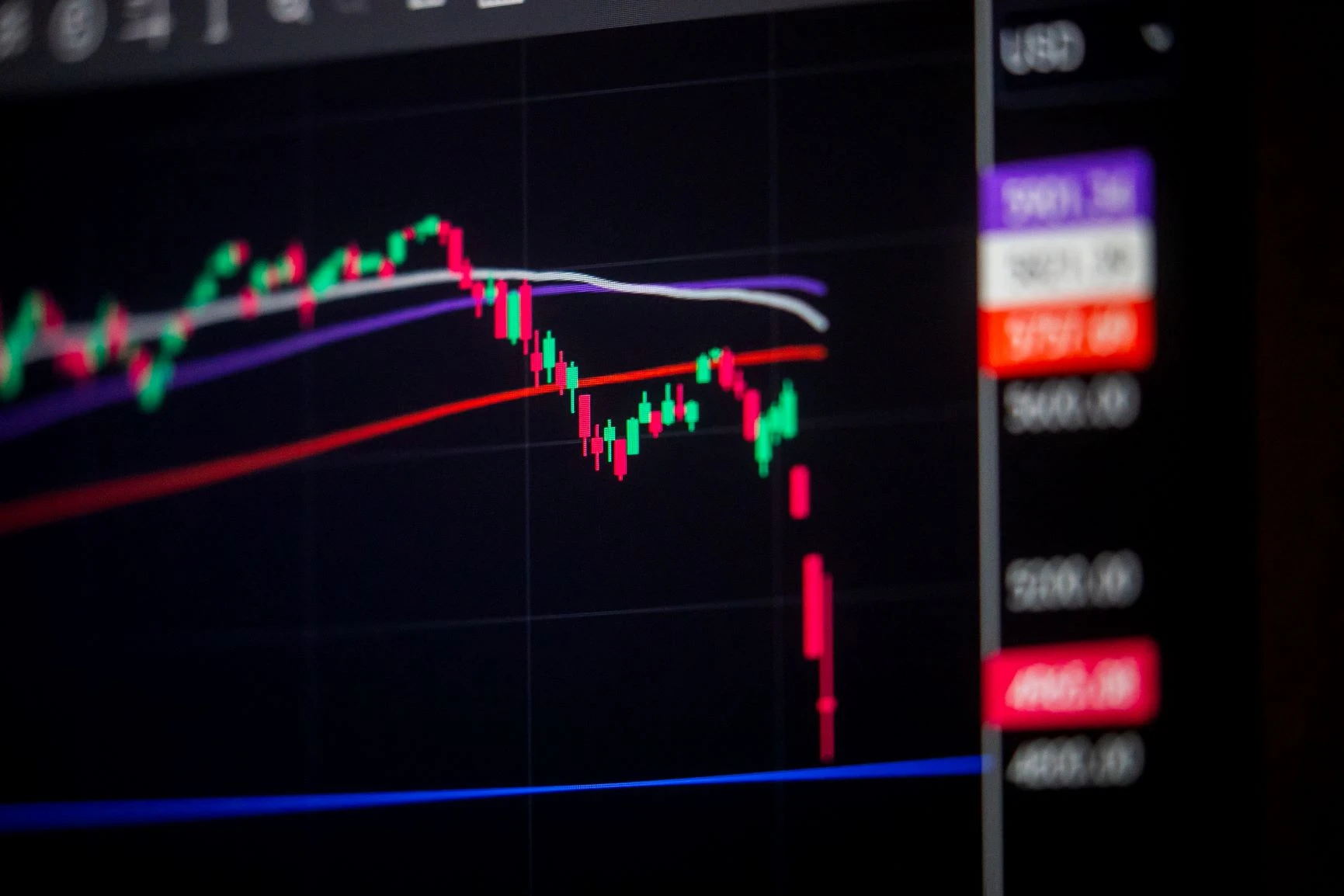
US Treasuries sold off while the dollar weakened and equities declined. Between April 4 and April 11, the yield on the 10-year US Treasury rose by almost 50 basis points, the third-largest weekly increase since 1986, according to the European Central Bank.
The ECB subsequently described the episode as a “marked change in cross-asset behavior compared with typical patterns”.
US Treasuries and the greenback have historically benefited during periods of heightened market risk, yet in April of last year both behaved differently. The normally positive correlation between 10-year Treasury yields and the dollar turned negative, while the dollar temporarily failed to provide its traditional natural hedge for non-US investors.
The changing relationship between equities and government bonds provides a broader example of the same problem. In the period after the 2008 global financial crisis, sagging equity markets were frequently accompanied by a drop in government bond yields. Weakening growth encouraged central banks to ease monetary policy, supporting sovereign bond prices and allowing fixed income to provide a natural counterweight to equity risk.
Yet, persistent inflation can scupper that relationship. When the shock affecting equities is simultaneously pushing inflation and interest-rate expectations higher, bonds may no longer provide the same protection. Equities and government bonds can decline together, turning what appeared to be a diversified portfolio into a collection of exposures sensitive to the same underlying macroeconomic risk.
Even gold has become more complicated than its traditional safe-haven reputation might suggest. Recent IMF analysis finds that gold is not a consistent hedge against equity-market downturns. 3] Its correlation with the S&P 500 was close to zero over the period from 1998 to 2026 and negative before the Covid-19 pandemic, but has subsequently turned positive. The implication is not that gold has ceased to offer diversification benefits, but that those benefits cannot be assumed to operate consistently across every type of market stress.
As well as changing over time, correlations can behave differently across market regimes. A relationship observed during a low-inflation growth shock may look very different during a supply shock, geopolitical event or period of fiscal stress. Risk frameworks therefore need to consider not only the strength of a historical relationship, but the conditions that produced it — and how that relationship might behave when those conditions change.
A closer eye on diversification
Macroeconomic shocks aside, there has also been a more systemic change in asset allocation as governments, companies and investors reassess geographic, currency and sector concentrations.
Gold provides a particularly visible example. According to the World Gold Council’s 2026 Central Bank Gold Reserves Survey, central banks have accumulated an average of around 1,000 tons of gold annually over the past four years, double the average during the preceding decade. The survey also found that 74% of respondents expected the US dollar’s share of global reserves to be moderately or significantly lower in five years.
While the dollar is not about to lose its central role in global finance, diversification at the margin can still have significant consequences. When very large pools of capital alter their allocations even modestly, the effects can be transmitted across currencies, sovereign bonds, commodities and alternative reserve assets.
Company-side too, more businesses are likely to accept higher costs in exchange for reduced dependence on individual countries or suppliers in order to provide better insulation against market shocks.
This kind of diversification can produce market movements that appear anomalous when viewed through models calibrated solely on the economic relationships of the past.
Moving from probability to possibility
Conventional statistical models are effective at estimating the outcomes implied by observed market behavior. Scenario analysis asks a different question: what happens if the relationships embedded in those observations cease to hold?
A risk team might therefore examine the consequences of oil prices and government bond yields rising simultaneously, or of stocks falling without the corresponding appreciation in a traditional safe-haven currency. It might model a geopolitical shock that simultaneously weakens sovereign bonds, equities and currencies, or examine what happens when liquidity deteriorates across several apparently unrelated positions at once.
For large sell-side institutions, there is a further challenge: aggregating risk across businesses. Geopolitical and policy shock do not respect organizational divisions.
The vulnerability may not sit within an individual position or desk, but in the interaction between them. An institution might appear diversified when exposures are viewed separately but remain highly sensitive to a single macroeconomic or geopolitical scenario at the institutional level.
A new playbook for a less predictable world
For sell-side firms, the appropriate response is not to abandon established models but to reduce dependence on any single representation of how markets are expected to behave.
Historical correlations, value-at-risk models and conventional sensitivities remain important, but they increasingly need to be supplemented by scenario analysis, cross-asset stress testing and tools capable of examining what happens when familiar relationships fail.
The practical value of that analysis is greatest when it informs the next trading decision. If a proposed trade increases exposure to a scenario already concentrated elsewhere in the institution, that insight can influence the hedge, the amount of risk a desk is prepared to take and, ultimately, the price quoted to the client.
In an environment increasingly shaped by policy uncertainty, geopolitical negotiation and shifts in global capital allocation, yesterday’s hedge can become tomorrow’s risk. Risk frameworks therefore need to account not only for how markets have behaved historically, but for how relationships could change under different economic and geopolitical regimes.
By the time historical correlations have adjusted, it may already be too late to identify emerging vulnerabilities.
The data and other information included in this publication is for illustrative purposes only, available “as is”, non-binding and constitutes the provision of factual information, rather than financial product advice. BLOOMBERG and BLOOMBERG INDICES (the “Indices”) are trademarks or service marks of Bloomberg Finance L.P. (“BFLP”). BFLP and its affiliates, including BISL, the administrator of the Indices, or their licensors own all proprietary rights in the Indices. Bloomberg L.P. (“BLP”) or one of its subsidiaries provides BFLP, BISL and its subsidiaries with global marketing and operational support and service. Certain features, functions, products and services are available only to sophisticated investors and only where permitted. Bloomberg (as defined below) does not approve or endorse these materials or guarantee the accuracy or completeness of any information herein, nor does Bloomberg make any warranty, express or implied, as to the results to be obtained therefrom, and, to the maximum extent allowed by law, Bloomberg shall not have any liability or responsibility for injury or damages arising in connection therewith. Nothing in the Services or Indices shall constitute or be construed as an offering of financial instruments by Bloomberg, or as investment advice or investment recommendations (i.e., recommendations as to whether or not to “buy”, “sell”, “hold”, or to enter or not to enter into any other transaction involving any specific interest or interests) by Bloomberg. Information available via the Index should not be considered as information sufficient upon which to base an investment decision. All information provided by the Index or in this publication is impersonal and not tailored to the needs of any person, entity or group of persons. Absence of any trademark or service mark from this list does not waive Bloomberg’s intellectual property rights in that name, mark or logo. For the purposes of this publication, Bloomberg includes BLP, BFLP, BISL and/or their affiliates.
BISL is registered in England and Wales under registered number 08934023 and has its registered office at 3 Queen Victoria Street, London, England, EC4N 4TQ. BISL is authorised and regulated by the Financial Conduct Authority as a benchmark administrator.
© 2026 Bloomberg. All rights reserved.