ARTICLE
Oracle earnings deep dive reveals good, bad, ugly of AI boom

Functions for the Market
- Oracle’s cloud infrastructure revenue surged 84% to $4.9 billion, beating the 79% analysts expected, while the company forecast $90 billion in revenue for the next fiscal year, handily topping Wall Street projections.
- The AI buildout came at a steep cost: free cash flow fell to negative $11.48 billion, more than 50% worse than the $7.79 billion loss analysts had forecast, and capital expenditures hit $18.6 billion in the quarter.
- Oracle is pulling every lever to manage the cash crunch, from thousands of job cuts and a scrapped Texas data center expansion with OpenAI to a new model where some cloud customers pay for their own chips.
Background
Oracle shares soared as much as 15% in March after the software giant reported third-quarter results that beat expectations and issued a revenue outlook that suggests little letup in demand for AI computing. The surge marked the stock’s biggest intraday gain in six months.
PRODUCT MENTIONS
Still, the strong quarter has done little to quiet a broader debate on Wall Street over whether the industry’s AI spending spree is creating a bubble. Microsoft and Amazon both reported better-than-expected earnings only to see their shares sell off over concerns about the cost of building out AI infrastructure.
“Some smaller or single-focused SaaS players may well be disrupted, but Oracle will not be among them,” said co-Chief Executive Officer Mike Sicilia. The company said AI-assisted coding is enabling it to build more software with smaller teams.
The issue
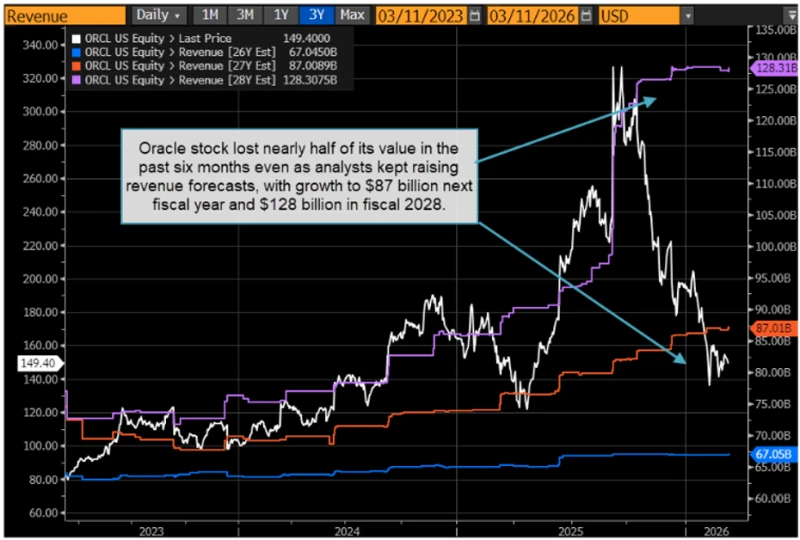
The rally came after months of investor anxiety over Oracle’s massive AI spending spree. Even including the post-earnings gains, the stock is still down about 50% from its September peak. The week before earnings, the company reportedly was planning for thousands of job cuts to help trim costs, and it scrapped plans with OpenAI to expand a flagship data center in Abilene, Texas, after negotiations over financing fell apart.
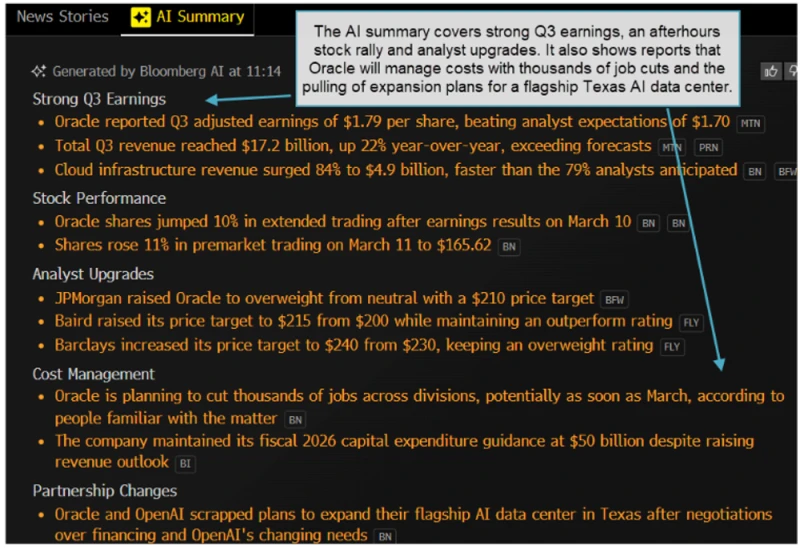
Oracle’s latest earnings report lays bare the promises and perils of the artificial intelligence boom. Cloud infrastructure revenue jumped 84% to $4.9 billion, surpassing the 79% that analysts had expected. Multicloud Database revenue surged 531% and AI Infrastructure revenue 243%. Meanwhile, the AI buildout swelled negative free cash flow to $11.48 billion, far worse than the $7.79 billion loss analysts expected.
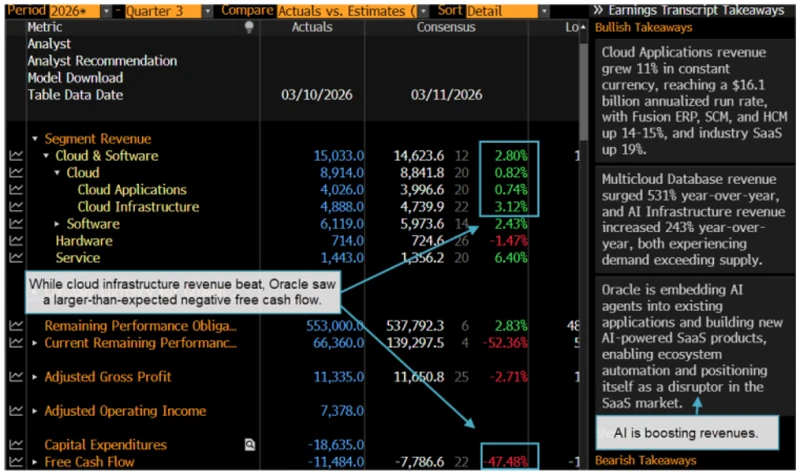
Total revenue increased 22% to $17.2 billion, and adjusted earnings of $1.79 per share topped the $1.70 analysts had projected. The tech behemoth said total revenue will reach $90 billion in the fiscal year beginning in June.
“The demand for cloud computing for AI training and inferencing continues to grow faster than supply,” Oracle said. Capital expenditures hit $18.6 billion in the quarter, though the company maintained its outlook for $50 billion in capital costs for the current fiscal year. The company plans to raise up to $50 billion in debt and equity financing this year.
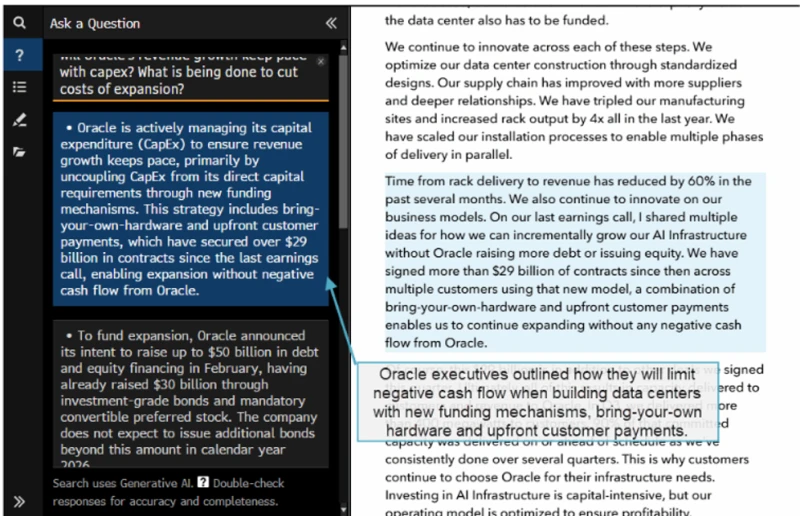
Executives outlined how they plan to limit negative cash flow with bring-your-own hardware arrangements and upfront customer payments. How Oracle balances its AI ambitions against a mounting cash crunch will be the story investors watch in the quarters ahead.
Tracking
Track Oracle’s earnings estimates and revenue forecasts with the EEG (Earnings Estimates Graph) function:
- While in the Oracle ticker, type “earnings estimate graph” in the command line and select EEG. The shortcut is ORCL US Equity EEG.
- Type “revenue” in the first amber box and select Revenue.
- Click Add/Edit Periods on the right and tick Annuals for 2026, 2027 and 2028. Click Add to Chart. Delete existing periods.
For more information on this or other functionality, click here to request a demo with a Bloomberg sales representative. Existing clients can press <HELP HELP> on their Bloomberg keyboard.