
Bloomberg Economics
This analysis is by Bloomberg Economics Senior India Economist Abhishek Gupta. It appeared first on the Bloomberg Terminal.
1. Modi’s FTAs to offset Trump tariffs, lift India growth potential
India’s growth potential is set to rise over the next decade. Structural reforms, deeper trade integration and a growing workforce will expand capacity. A decade-long drive to plug India into global supply chains and sharpen competitiveness is gaining traction. Manufacturing’s share of GDP shows signs of reviving. Prime Minister Narendra Modi’s widening network of free-trade agreements should reinforce the shift and help offset the drag from US tariffs.
Infrastructure investment, manufacturing subsidies and productivity gains from AI should add momentum. We expect growth to average 7.9% through 2035, up from 6.4% in the decade before the pandemic. Global diversification away from China and the potential for better trade deals offer upside. Higher unemployment and geopolitical friction are the key risks.
2. India to reach 8% growth peak by ’30s, high-income status by ’53
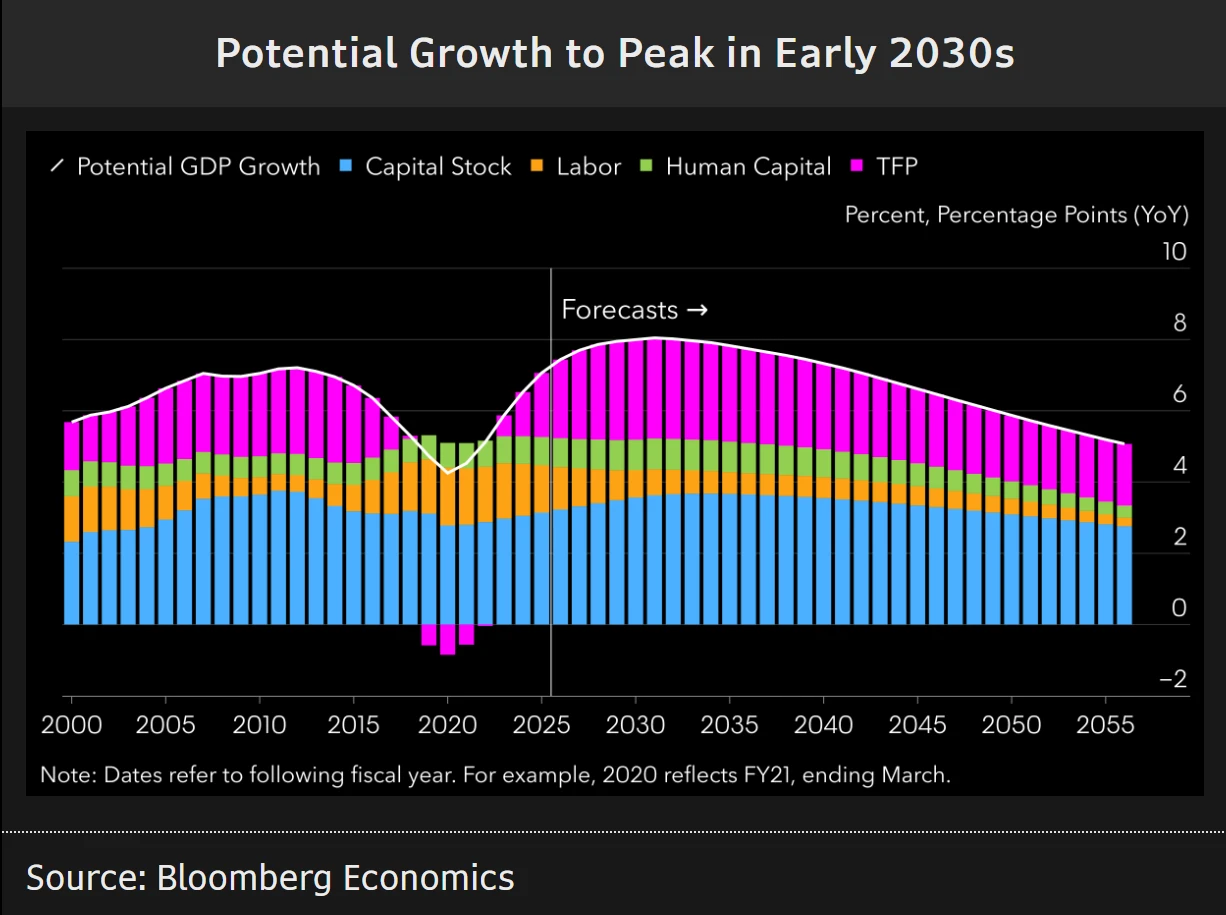
We see India’s long-term potential growth peaking at around 8% in the early 2030s – the fastest among major economies. Growth should then gradually slow as labor-force gains fade and investment needs ease. Prime Minister Narendra Modi wants India to achieve developed-economy status by 2047. Our forecasts suggest per-capita income could cross the high-income threshold by 2053, measured in constant 2026 US dollars.
A structural decline in inflation in recent years underscores India’s capacity to sustain faster growth without stoking price pressures. A range of forces is strengthening the economy’s supply side, including political stability, rising agricultural productivity, infrastructure investment and fiscal consolidation. Lower tariffs and falling logistics costs are also boosting growth, while production subsidies are fueling a manufacturing-led investment cycle.
3. India manufacturing push targets demographic dividend
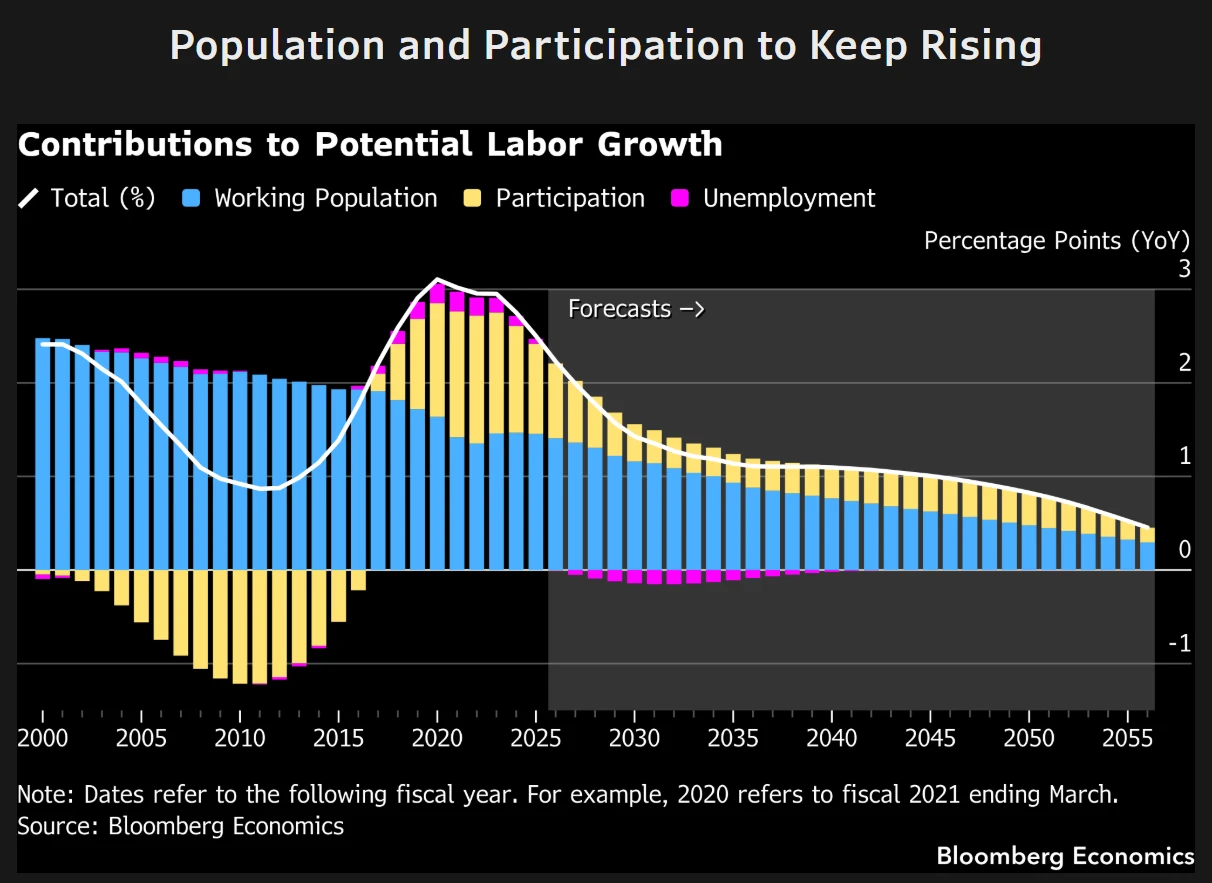
Policymakers are focused on generating manufacturing jobs, with the sector’s GDP share starting to pick up after over a decade of stagnation. AI adoption is slowing IT job growth but that’s not stopping the sector, along with business services and global capability centers, from continuing to create high-skilled positions. We expect the participation rate for people aged 15 and above to rise to 65% by 2055 from 59.3% in 2025, alongside growth in this population.
Vocational training among those aged 15-59 jumped to 41.1% in 2025 from 8.1% in 2018, backed by government funding and increased training in schools. Female participation rose over the same period to 40% from 23.5%, supported by greater self-employment and access to finance, with room to rise further. Over 40% of workers remain in agriculture, leaving scope to shift underemployed labor into more productive work.
4. Investment in infrastructure, urbanization to drive India growth
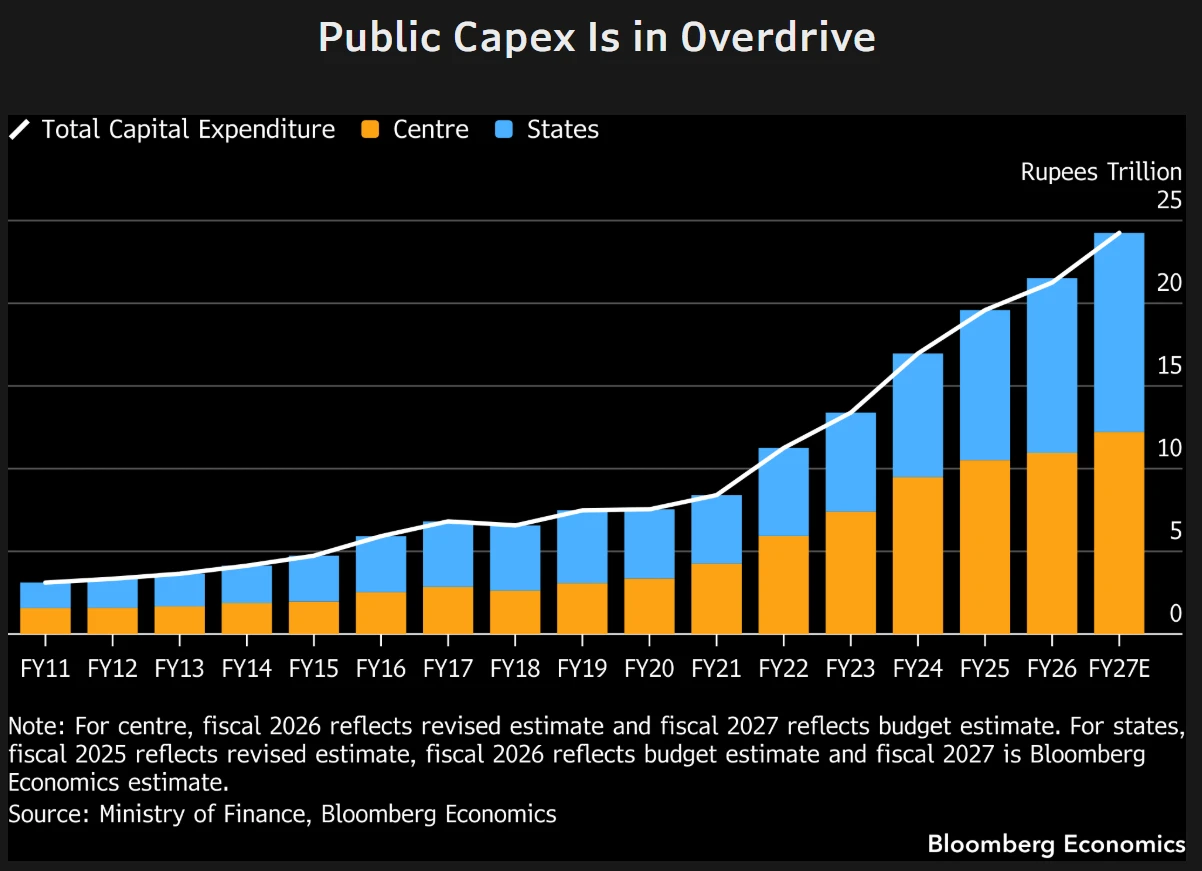
India’s infrastructure build-out is lifting productive capacity. Federal and state capex is set to top 24 trillion rupees in fiscal 2027, more than tripling in seven years. We estimate interest payments could fall to 3.8% of GDP over the next decade from 5.5% in fiscal 2027, creating more fiscal room for additional capex and helping market rates decline. Completion of more transport, energy and irrigation projects will lower costs and lift domestic competitiveness.
Urbanization adds another growth lever. The World Bank puts India’s urban share at 36%. Our satellite analysis shows 58% of the population living in urban-like densities. Providing infrastructure for this hidden urbanization in rural areas could raise productivity and connect firms to larger pools of skilled labor, attracting more manufacturing and services investment.
5. Modi reforms, AI to lift India’s productivity
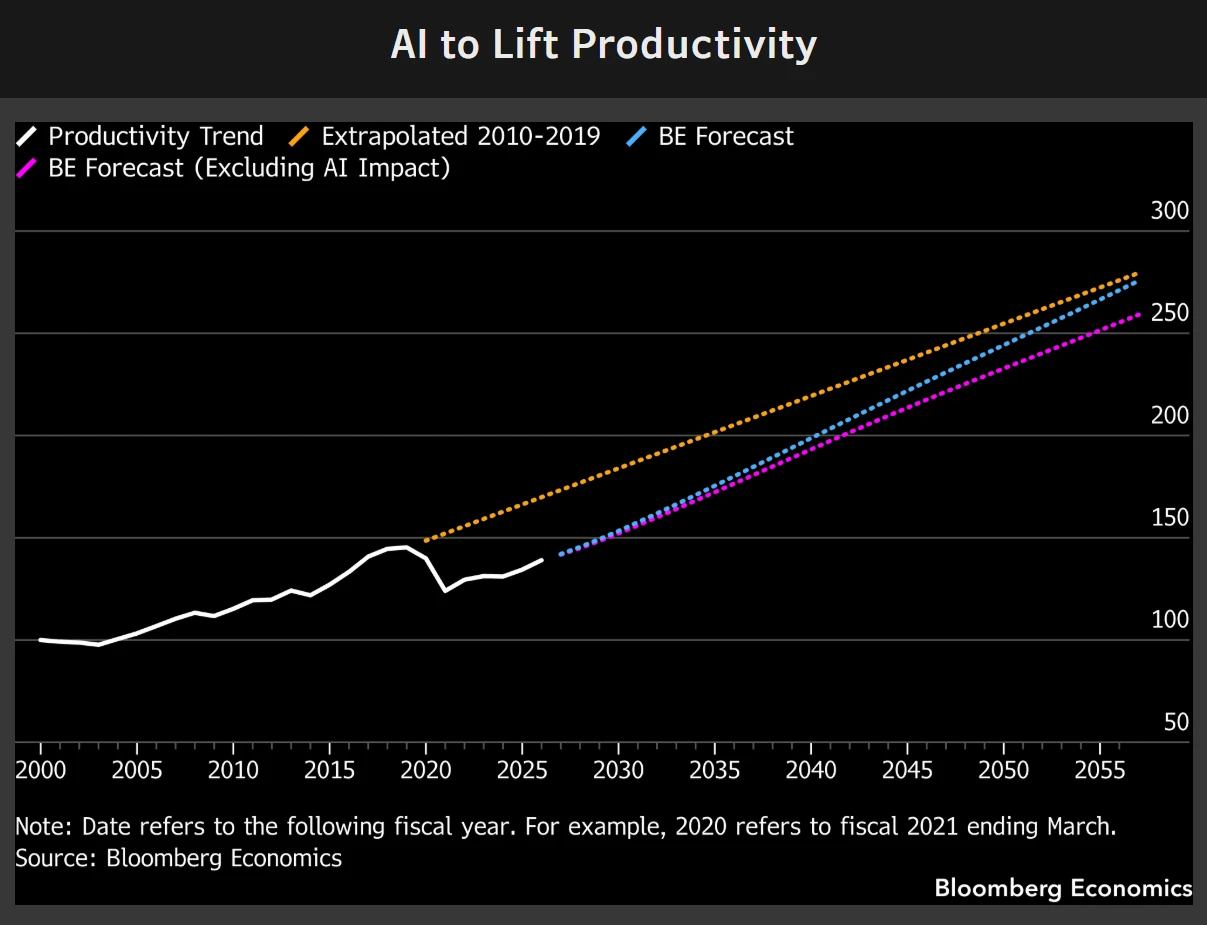
We expect India’s total factor productivity growth to average 2.6% in the decade through fiscal 2036, up from 1.6% before the pandemic. Years of structural reforms should improve labor and capital efficiency. Rising outward foreign investment and a flurry of trade deals will probably boost knowledge and technology transfers back to India. Further ahead, TFP growth may taper after the mid-2030s as India approaches global best practices, slowing to 1.7% by 2056.
Our forecast assumes a conservative 0.2-ppt boost from AI as adoption raises worker efficiency and reinforces India’s role as a global capability-center hub. IT services are a key swing factor. Moving up the value chain, aided by government support for data centers and cheaper domestic compute, could deliver larger gains. Failure to adapt would instead threaten the high-skill jobs India needs to create.
6. Higher unemployment, geopolitical friction are India’s big risks
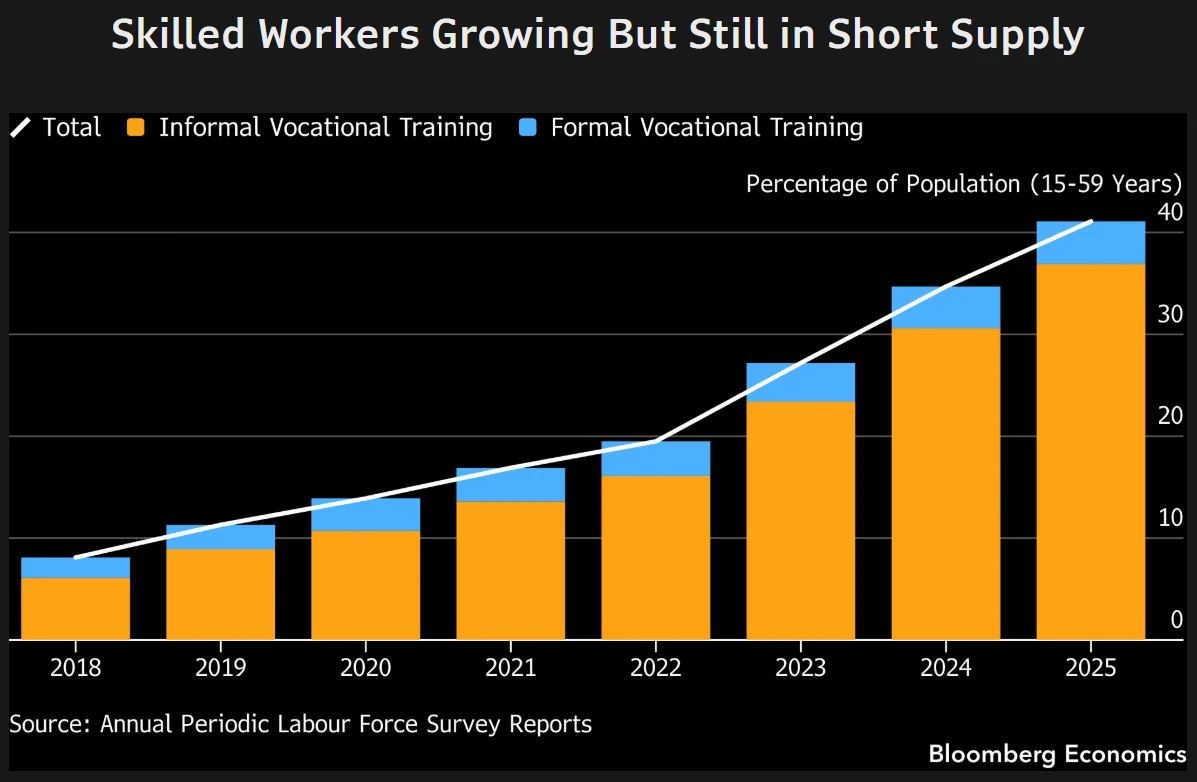
An increase in unemployment could turn India’s demographic dividend into a liability. This year’s student protests in response to exam-paper leaks, and the resignation of the education minister, showed how quickly frustration over access to job opportunities can fuel political discontent. India also has a large skills gap relative to Asian peers. AI is compounding the problem: automation is slowing hiring in IT services, curbing the supply of high-skill jobs.
Geopolitical friction could also knock India’s ascent off course. US protectionism threatens exports, with steep tariffs on generic drugs due from 2028. US pressure motivated by India’s ties with Russia and Iran threatens to narrow its strategic room. China’s grip on critical-mineral supply chains and its rare-earth export controls pose risks to manufacturing. How India navigates these challenges will shape its long-term growth path.